
Urban Mental Health: How to Find Refuge and Peace in City Life
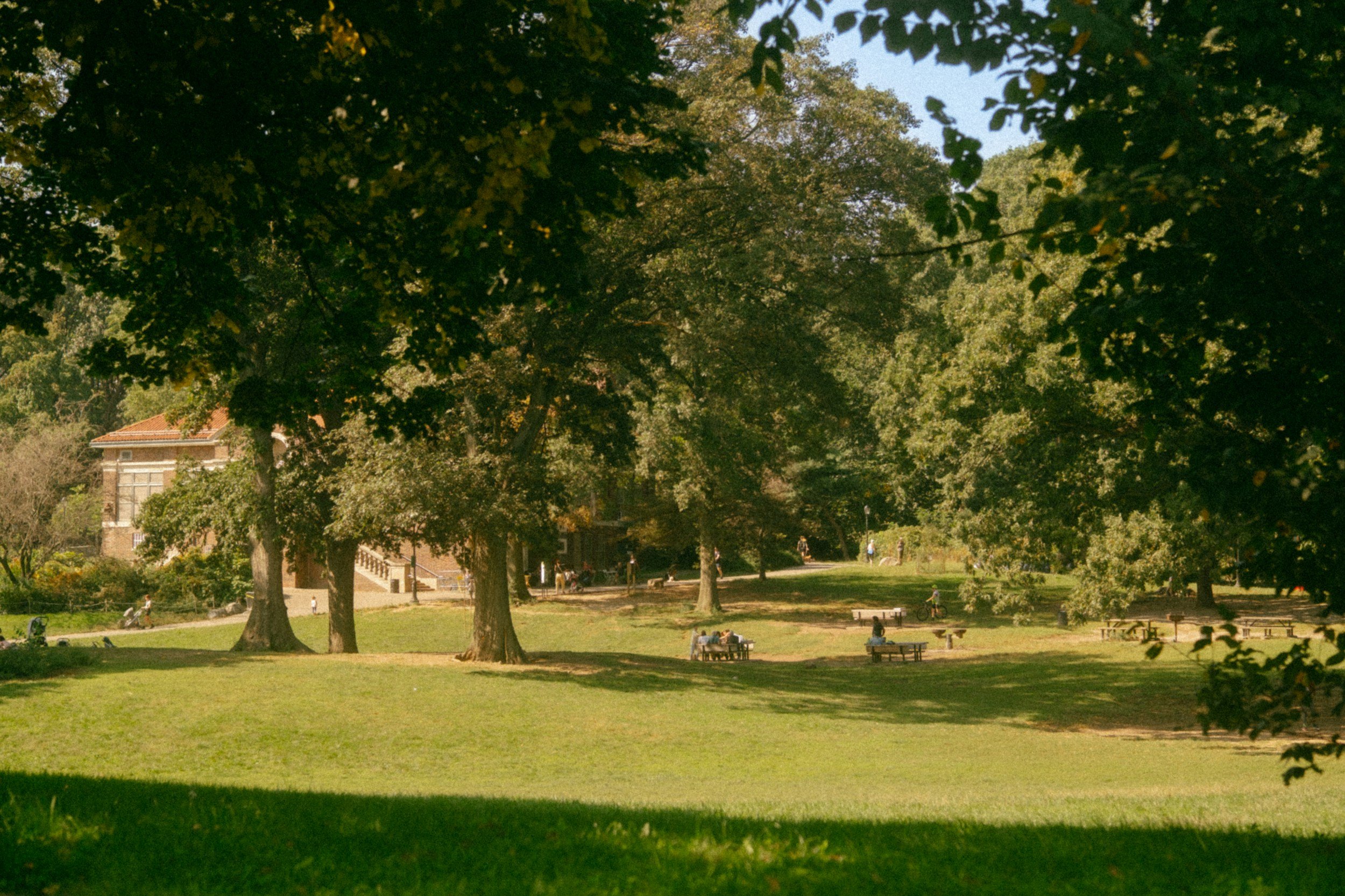
When I moved to New York City five years ago to pursue my PhD in Clinical Psychology, my senses were immediately overwhelmed. As soon as I woke up and stepped out onto the streets of Manhattan, I was inundated with the sounds of blaring sirens, honking cars, and the rumble of the subway beneath the ground. I noticed that my thoughts began to race at the same pace as the overwhelming stimuli around me, my eyes darting around my surroundings as I tried to get my bearings in this new place, I would eventually learn to call home.
With more than 50% of the world’s population living in urban environments, it is critical for mental health providers to understand how these environments impact mental health. Mental health is also a complex and evolving concept, with an increasing emphasis not only on mental illness but also on mental wellness. The World Health Organization (WHO) defines mental health as “a state of complete physical, mental and social well-being, not merely the absence of disease” (WHO, 2020). The WHO expands on this definition, stating that mental wellness includes an individual's ability to cope with stressors, work productively, contribute to their community, and form connections (WHO, 2020). So, how do urban environments impact mental health and wellness?
With increasing urbanization, social connection and cohesion—two critical dimensions of mental wellness—are changing as well. Traditionally, humans lived in villages that promoted community connection and shared responsibility for one another. Urbanization has coincided with a rise in individualism, which has contributed to increased disconnection and loneliness. In one report, 36% of U.S. adults reported experiencing “serious loneliness,” which can be a risk factor for a range of mental and physical health consequences. Children are experiencing loneliness, too, with teenagers among the loneliest groups worldwide. Loneliness is a serious mental health crisis that warrants our attention. Creating social connections and finding community can be complex, but doing so can be incredibly transformative for mental well-being.
Creating social connections in an urban environment can be even more complicated for individuals who are neurodivergent or have different sensory needs. Research conducted with parents of children with Autism Spectrum Disorder (ASD) found that their children engaged in more play in urban environments with lower residential building density, greater residential greening, and higher destination accessibility. Other factors that are important for playgrounds serving children with ASD include perimeter containment, access to sensory play, predictable sight lines that allow children to preview an activity before joining, and quieter zones. A list of New York City playgrounds specifically designed with attention to neurodiversity can be found below.
Urban environments are neither uniformly beneficial nor detrimental to mental health. Rather, certain features of urban environments can serve as risk or protective factors for mental health outcomes. Risk factors for depressed mood, tiredness, and loneliness in urban environments include lower socioeconomic status, higher levels of air and noise pollution, increased traffic and dense infrastructure, and less nearby green space. Conversely, protective factors associated with fewer symptoms of anxiety in urban areas include greater access to green space and bodies of water. The age-old question of nature versus nurture is complex in this body of research. Researchers also found that brain regions associated with emotion regulation mediate the relationship between urban environments and anxiety symptoms. In other words, just because you live in an urban environment with abundant green space and access to water does not mean your anxiety levels will necessarily be low; genetic and biological factors also play a role.
Choosing a playground or neighborhood that your child finds calming and regulating can be empowering for their well-being. Every child is different, and while some children may find a secluded park calming, others may find the sounds of the subway or birdwatching regulating. Each child has a unique psychological makeup, and parents should not assume that what helps them feel regulated will have the same effect on their child. It is best to ask your child what they find calming and follow their lead.
For parents and adults, if you feel lonely or anxious in urban life, I want you to know that you are not alone. When I moved to New York five years ago, I, too, felt overwhelmed. Throughout my time living in the city, I have sought out places of refuge in nature and in communities where I feel comfortable and affirmed. Finding places where we feel a sense of belonging can be incredibly healing. I have created a list of resources in Brooklyn that I hope will empower you to find moments of refuge from the hustle and bustle of urban life. This list is not comprehensive, but my hope is that it can serve as a starting point to help you prioritize your mental well-being and community connections. Remember, your well-being matters.
Green spaces and bodies of water in Brooklyn
Prospect Park, particularly the Ravine
Local community gardens—find one near you: NYC Parks GreenThumb
A hidden gem in Cobble Hill, Brooklyn: the Secret Garden. Learn more
Green Dome Garden—a small, volunteer-maintained community garden at 227–235 North 12th Street in Williamsburg, Brooklyn
Green-Wood Cemetery—Sunset Park / Greenwood Heights
Brooklyn Bridge Park—Brooklyn Heights / DUMBO
Fort Greene Park—Fort Greene
Farmers markets: NYC Farmers Markets Map
Bodies of water: Explore Brooklyn’s waterways
Playgrounds for neurodivergent children
Community opportunities and events in Brooklyn
Brooklyn Public Library classes: Browse events and classes
Prospect Park Alliance events: Prospect Park
Community dinners through organizations such as Good Neighbors Brooklyn
Parent organizations such as Park Slope Parents
Neighborhood playground communities
Local spiritual or religious organizations
References:
Xu, J., Liu, N., Polemiti, E., Garcia-Mondragon, L., Tang, J., Liu, X., Lett, T., Yu, L., Nöthen, M. M., Feng, J., Yu, C., Marquand, A., Schumann, G., & the environMENTAL Consortium. (2023). Effects of urban living environments on mental health in adults. Nature Medicine, 29(6), 1456–1467. https://doi.org/10.1038/s41591-023-02365-w
Harvard Graduate School of Education, Making Caring Common. Loneliness in America
Okkels, N., Kristiansen, C., Munk-Jørgensen, P., & Sartorius, N. (2018). Urban mental health: Challenges and perspectives. Current Opinion in Psychiatry, 31(3), 258–264. https://doi.org/10.1097/YCO.0000000000000413
World Health Organization. Mental health: Strengthening our response
World Health Organization. Commission on Social Connection report
Wu, S., Pan, C., Yao, L., & Wu, X. (2022). The impact of the urban built environment on the play behavior of children with ASD. International Journal of Environmental Research and Public Health.